
Summary
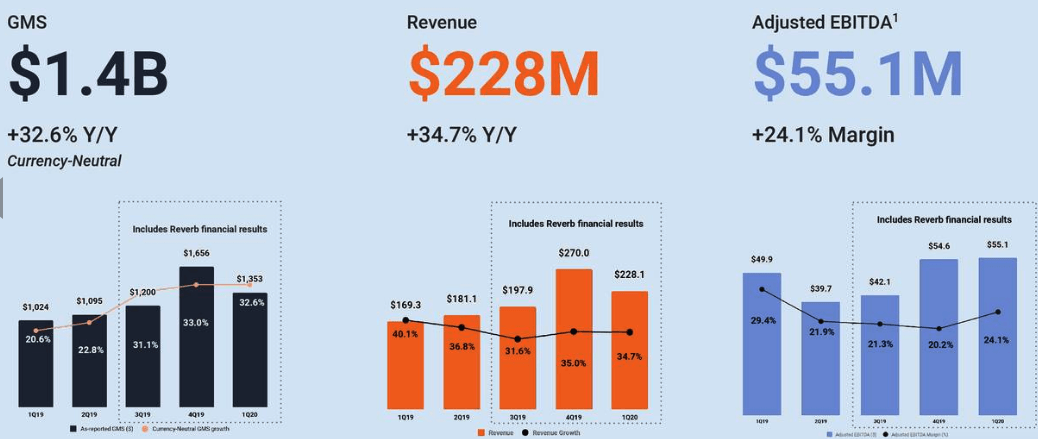
- In Q1, a quick business pivot in response to surging mask demands amid the pandemic in April resulted in solid +30% growth in GMS and revenue.
- The speed at which the pivot happened, along with the quality of execution, was impressive considering the complexity of eCommerce operations in general.
- We noted Etsy's strong execution ability in our first coverage last year, and we continue to recommend the stock as a result.
Overview
Etsy (ETSY) share price has appreciated by +96% since our first coverage last November, where we discussed its data-driven approach in driving conversions. The company’s strong execution continued to drive the outperformance in Q1, even amid the pandemic, as the business saw +30% growth in both GMS (Gross Merchandise Sales) and revenue. We believe that Etsy will continue to benefit from its strong culture, management’s execution, and the favorable advertising environment, which the company can leverage to drive more repeat purchases in Q2. We maintain our Overweight rating on the stock.
Catalyst
Q1 outperformance, as a result of its adaptive response to uncertainty, demonstrates its strong company culture and execution. We have always been impressed by Etsy’s management team, which continued to deliver even under a challenging circumstance. During April, Etsy responded to the demand surge in masks rapidly as it worked on a lot of moving parts across different areas, such as engineering, marketing, and logistics, amid the pandemic and work-from-home situation.
(Source: Company’s Earnings Call Slide)
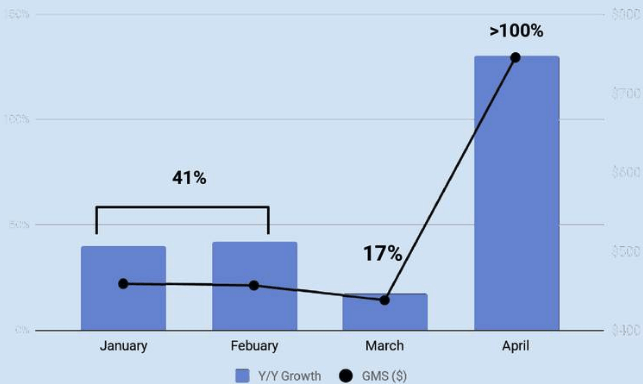
As a result, the company generated over $133 million GMS in April, thanks to the 12 million face masks sold through the platform, which ended up driving the exceptional 32-34% growth in GMS and revenue in Q1, while maintaining its solid +20% adjusted EBITDA margin. Face mask sales also represented 17% of Etsy's marketplace GMS in April.
(Source: Company’s Earnings Call Slide)
We do not think that any eCommerce company can pull off this kind of performance within such a tight window, considering the level of complexity in mobilizing and orchestrating different areas of operations under pressures and uncertainties. Just a month before, in March, the company still saw a major slowdown, which brought down its GMS significantly.

